Charger commands and transaction state
Available: tenant fleet API. Send commands through
POST /v1/tenants/{tenant_id}/stations/{station_id}/commands with
stations:control and a persisted Idempotency-Key.
Example bodies (replace illustrative resource IDs):
{"action":"start","connector_id":14,"token":"authorized-id-tag"}{"action":"stop","transaction_id":21}A manual start does not verify or collect payment. The supplied charging token must satisfy the station/core authorization configuration. The public API does not offer arbitrary token registration. Use managed bill start or external charging sessions; both manage their own short-lived token and correlate the resulting transaction.
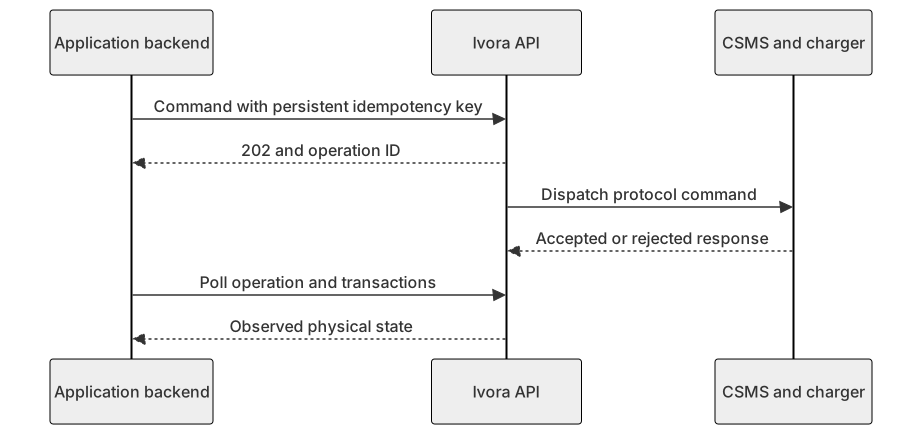
Diagram source
sequenceDiagram
  participant App as Application backend
  participant API as Ivora API
  participant C as CSMS and charger
  App->>API: Command with persistent idempotency key
  API-->>App: 202 and operation ID
  API->>C: Dispatch protocol command
  C-->>API: Accepted or rejected response
  App->>API: Poll operation and transactions
  API-->>App: Observed physical state
An operation marked succeeded confirms an upstream response, not physical
charging or completion. Observe station state and
GET /v1/tenants/{tenant_id}/transactions. Stop uses the actual transaction
resource ID. Check the completed transaction before finalizing a bill.
A rejected operation carries a stable code in result.error.code, for example
station_offline, connector_not_found, transaction_ended or
dispatch_unconfirmed. Subscribe to operation.completed
webhooks to learn the outcome without polling; the
event echoes the operation ID and full record.
Reset, unlock and availability commands use the same route. The API reference defines their allowed fields. In production, commands act on real chargers and drivers; simulate or mock them while developing payment flows.
Charger screen content is not a command. Charger displays are
desired state: a synchronous 200 write that Ivora keeps pushing, with no
202 operation to poll.